
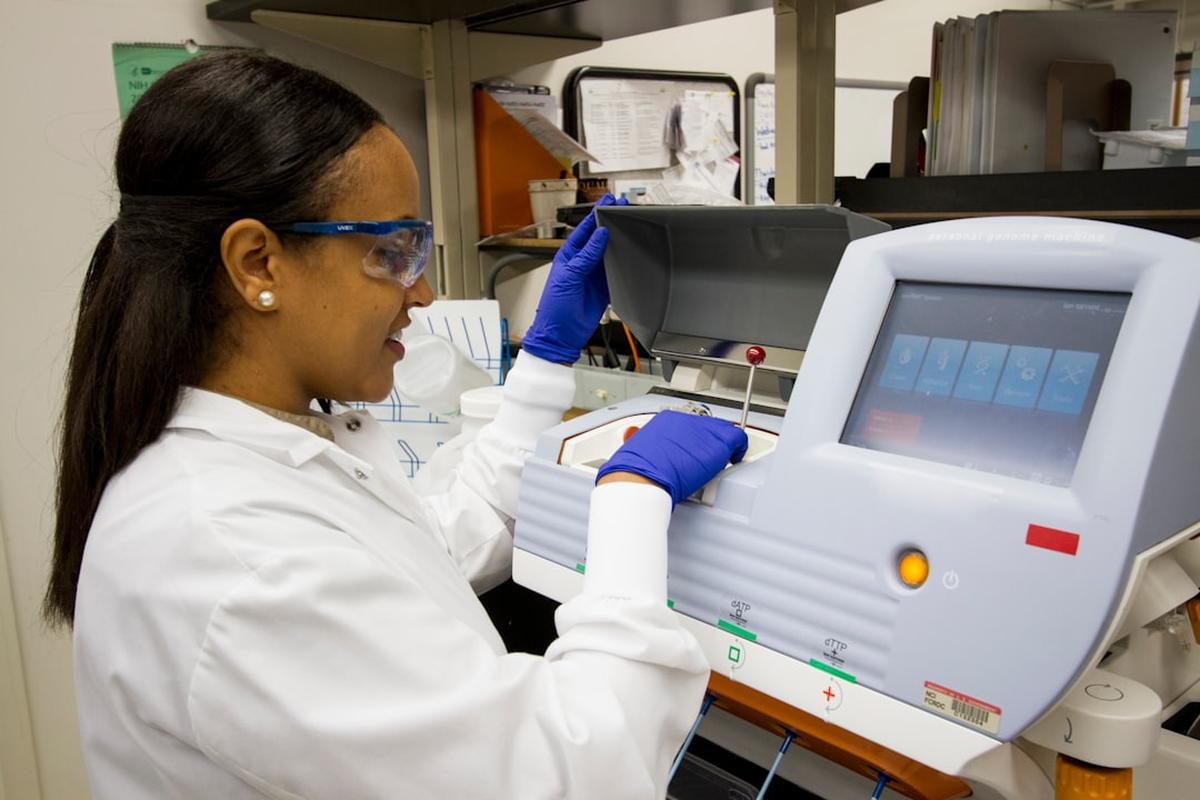
The fascinating world of genetics and DNA testing has opened new doors for individuals seeking to understand their ancestry. DNA, or deoxyribonucleic acid, is the blueprint of life, carrying the instructions for the growth, development, functioning, and reproduction of all known organisms. By studying our DNA, we can gain insights into our lineage, heritage, and even health predispositions.
Understanding the percentage of your DNA related to a specific ancestry can be a complex process. This article aims to provide a comprehensive guide on how to interpret a 7% DNA inheritance and what it means for your ancestry.
DNA and Ancestry: The Basic Connection
How DNA Testing Works
DNA testing involves analyzing a person’s DNA to identify genetic differences or similarities with others. These tests can reveal information about a person’s ancestry, family relationships, and genetic health risks.
In the context of ancestry, DNA testing involves comparing your DNA with reference groups from different regions worldwide. The more your DNA matches a particular group, the higher the percentage of your ancestry is from that region.
The Role of DNA in Tracing Ancestry
Our DNA is a mixture of our parents’ DNA, which in turn is a combination of their parents’ DNA, and so on. This pattern of inheritance allows us to trace our ancestry back through generations. However, the further back we go, the smaller the percentage of our DNA comes from each ancestor. This means that while we may inherit specific traits from distant ancestors, much of their genetic material gets diluted over time. By studying evolutionary relationships through genetics, scientists can determine how different individuals and populations are related and how traits have been passed down through generations. This approach also helps us understand human migration patterns and shared ancestry with other species.
Understanding DNA Percentages
What Does a 7% DNA Inheritance Mean?
When a DNA test reveals that you have 7% of a particular ancestry, it means that approximately 7% of your DNA matches the reference group for that region or ethnicity. This percentage can be traced back to an ancestor or group of ancestors from that region.
The Relationship Between DNA Percentage and Generations
The percentage of DNA you inherit from your ancestors roughly halves with each generation. For instance, you inherit about 50% of your DNA from each parent, 25% from each grandparent, and so on. Therefore, a 7% DNA inheritance could potentially be traced back to your great-great-great-grandparents.
Decoding the 7% DNA Inheritance
The Concept of Great-Grandparents in DNA Inheritance
As mentioned earlier, the percentage of DNA you inherit from your ancestors decreases with each generation. Therefore, the 7% DNA inheritance could potentially be traced back to a single ancestor or a group of ancestors several generations back.
How Many Generations Back is 7% DNA?
On average, you inherit about 12.5% of your DNA from each of your great-grandparents. Therefore, a 7% DNA inheritance could potentially be traced back to your 3rd, 4th, or even 5th great-grandparents. However, this is a rough estimate, and the actual number could vary due to the random nature of DNA inheritance.
The Significance of 3rd, 4th, 5th, and 6th Great-Grandparents in DNA Inheritance
The Role of 3rd Great-Grandparents in DNA Inheritance
Your 3rd great-grandparents contribute approximately 3.125% of your DNA. Therefore, if your DNA test shows a 7% inheritance from a particular region, it could potentially be traced back to two or more of your 3rd great-grandparents from that region.
The Role of 4th Great-Grandparents in DNA Inheritance
Your 4th great-grandparents contribute approximately 1.5625% of your DNA. Therefore, a 7% DNA inheritance could potentially be traced back to four or more of your 4th great-grandparents.
The Role of 5th Great-Grandparents in DNA Inheritance
Your 5th great-grandparents contribute approximately 0.78125% of your DNA. Therefore, a 7% DNA inheritance could potentially be traced back to eight or more of your 5th great-grandparents.
The Role of 6th Great-Grandparents in DNA Inheritance
Your 6th great-grandparents contribute approximately 0.390625% of your DNA. Therefore, a 7% DNA inheritance could potentially be traced back to eighteen or more of your 6th great-grandparents.
Case Study: Tracing Heritage Using DNA Percentage
The Process of Identifying Heritage Through DNA
Identifying your heritage through DNA involves comparing your DNA with reference groups from different regions worldwide. The more your DNA matches a particular group, the higher the percentage of your ancestry is from that region. This process helps you understand the origins of your ancestors and how different populations contributed to your genetic makeup. For example, you might discover how far 3% DNA traces back to a specific region, indicating a distant but real connection to that area’s people. Such insights can provide a deeper appreciation for your family’s migratory history and cultural heritage.
Real-life Example of Tracing Heritage Using 7% DNA
Consider a hypothetical scenario where a person’s DNA test reveals a 7% match with a reference group from Italy. This could potentially mean that one or more of their ancestors several generations back were Italian.
The Limitations and Challenges of DNA Testing for Ancestry
The Accuracy of DNA Testing
While DNA testing can provide valuable insights into your ancestry, it’s important to remember that these tests are not 100% accurate. The results can be influenced by the quality of the DNA sample, the reference groups used for comparison, and the algorithms used to analyze the data.
The Challenges in Interpreting DNA Test Results
Interpreting DNA test results can be challenging due to the complex nature of genetic inheritance. For instance, a 7% DNA inheritance does not necessarily mean that you have a single ancestor from that region. It could also mean that you have multiple ancestors from that region, each contributing a small percentage of your DNA.
Concluding Remarks
Understanding your ancestry through DNA testing can be a fascinating journey into your past. However, it’s important to approach these tests with a critical mind and understand their limitations. While a 7% DNA inheritance can provide clues about your ancestry, it’s just one piece of the puzzle. The future of DNA testing and ancestry looks promising, with advancements in technology and research paving the way for more accurate and detailed insights into our heritage.
Frequently Asked Questions
What does a 7% DNA inheritance mean?
A 7% DNA inheritance means that approximately 7% of your DNA matches the reference group for a particular region or ethnicity. This percentage can be traced back to an ancestor or group of ancestors from that region.
How many generations back is 7% DNA?
A 7% DNA inheritance could potentially be traced back to your 3rd, 4th, or even 5th great-grandparents. However, this is a rough estimate, and the actual number could vary due to the random nature of DNA inheritance.
What is the role of great-grandparents in DNA inheritance?
Great-grandparents play a significant role in DNA inheritance. On average, you inherit about 12.5% of your DNA from each of your great-grandparents.
How accurate are DNA tests for ancestry?
While DNA tests can provide valuable insights into your ancestry, they are not 100% accurate. The results can be influenced by the quality of the DNA sample, the reference groups used for comparison, and the algorithms used to analyze the data.
What are the challenges in interpreting DNA test results?
Interpreting DNA test results can be challenging due to the complex nature of genetic inheritance. For instance, a 7% DNA inheritance does not necessarily mean that you have a single ancestor from that region. It could also mean that you have multiple ancestors from that region, each contributing a small percentage of your DNA.
What is the future of DNA testing and ancestry?
The future of DNA testing and ancestry looks promising, with advancements in technology and research paving the way for more accurate and detailed insights into our heritage.
References:
- Jobling, M. A., Hurles, M. E., & Tyler-Smith, C. (2013). Human Evolutionary Genetics. Garland Science.
- Royal, C. D., Novembre, J., Fullerton, S. M., Goldstein, D. B., Long, J. C., Bamshad, M. J., & Clark, A. G. (2010). Inferring genetic ancestry: opportunities, challenges, and implications. American journal of human genetics, 86(5), 661-673.
- Tishkoff, S. A., & Kidd, K. K. (2004). Implications of biogeography of human populations for ‘race’ and medicine. Nature genetics, 36(11s), S21-S27.
Related posts:
 Tracing Your Ancestry: Understanding How Far Back 1% DNA Can Take You
 Decoding Ancestry: Understanding How Far Back 3% DNA Can Trace Your Heritage
 Exploring Genetic Heritage: How Far Can DNA Testing Trace Back Generations?
 Can You Trust Ancestry DNA? A Comprehensive Examination of DNA Testing Security and Accuracy
 Can DNA Reveal Your Ethnicity? Unraveling the Intricacies of Genetic Ancestry
 Understanding DNA-Binding Drugs: An In-depth Analysis of Drugs that Bind to DNA